

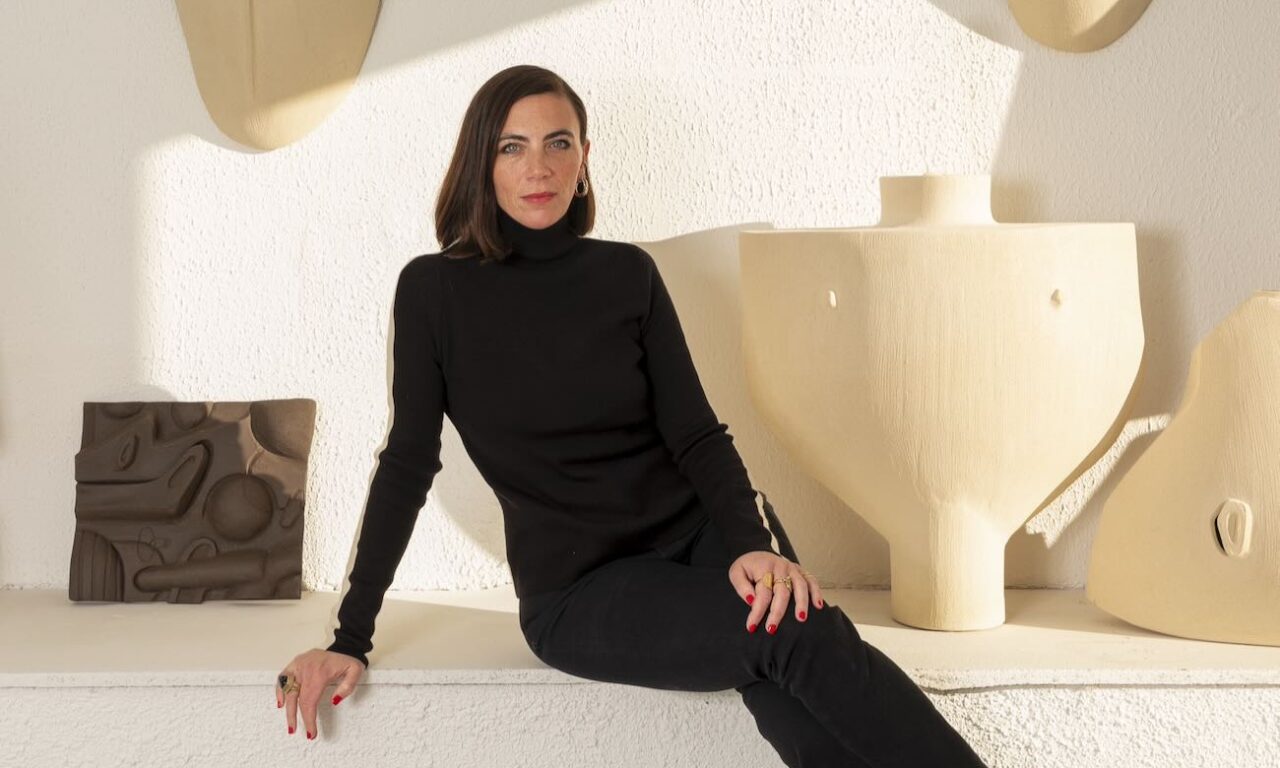
In Vallauris, a historic center of ceramic art, artist and designer Olivia Cognet has just opened an extraordinary 750-square-meter studio. A space designed to push the boundaries of clay, craftsmanship, and creativity.
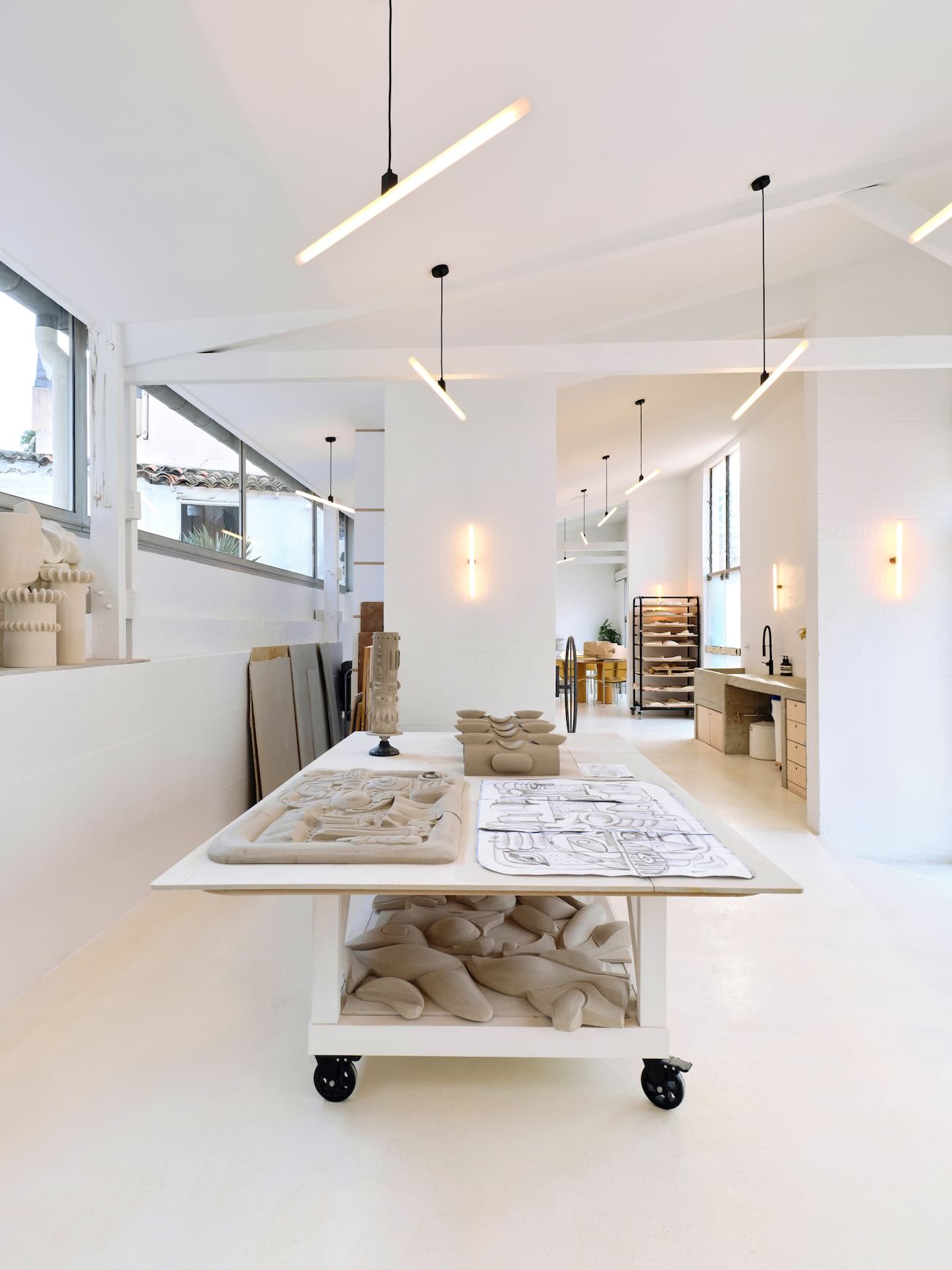
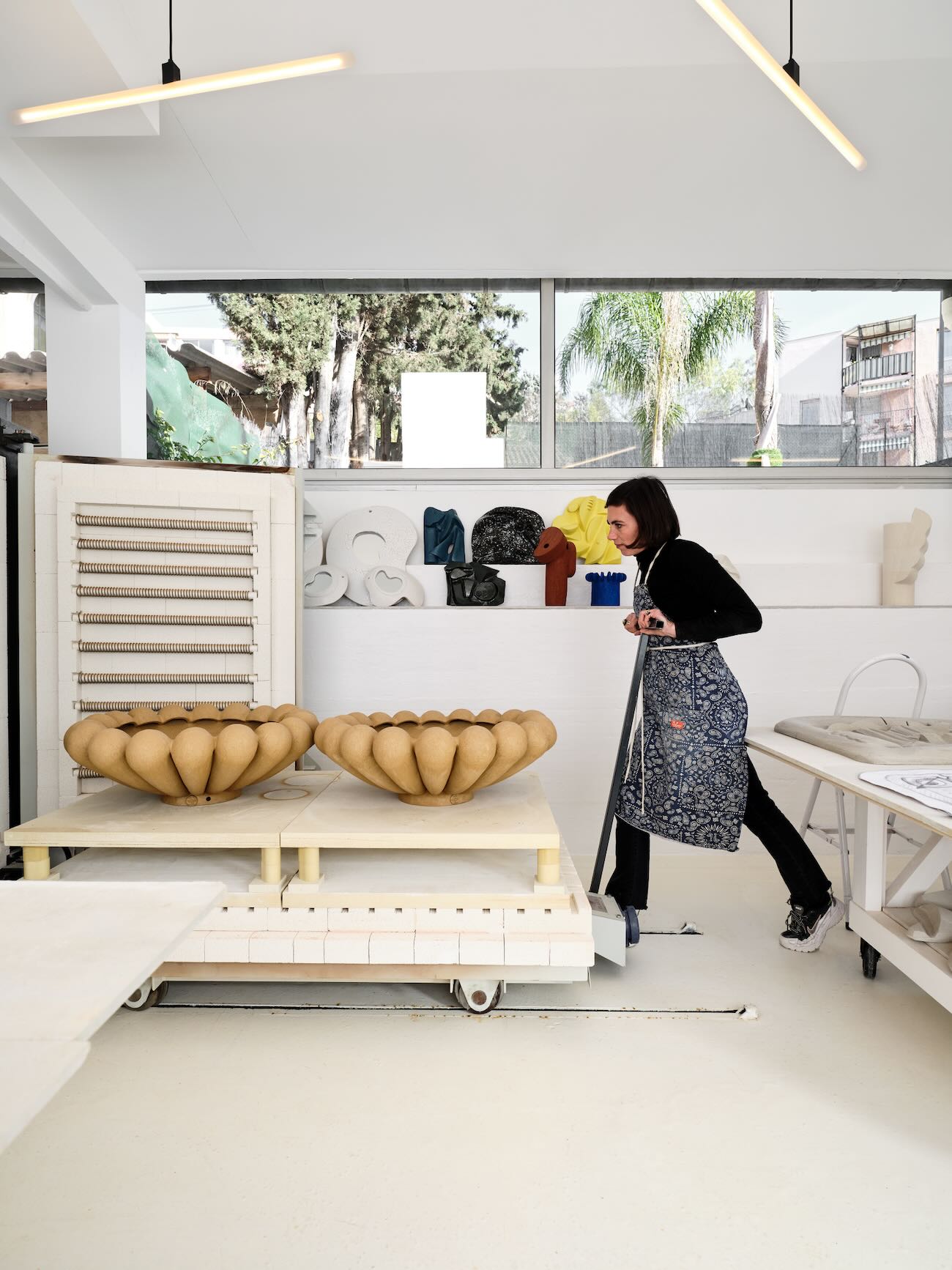
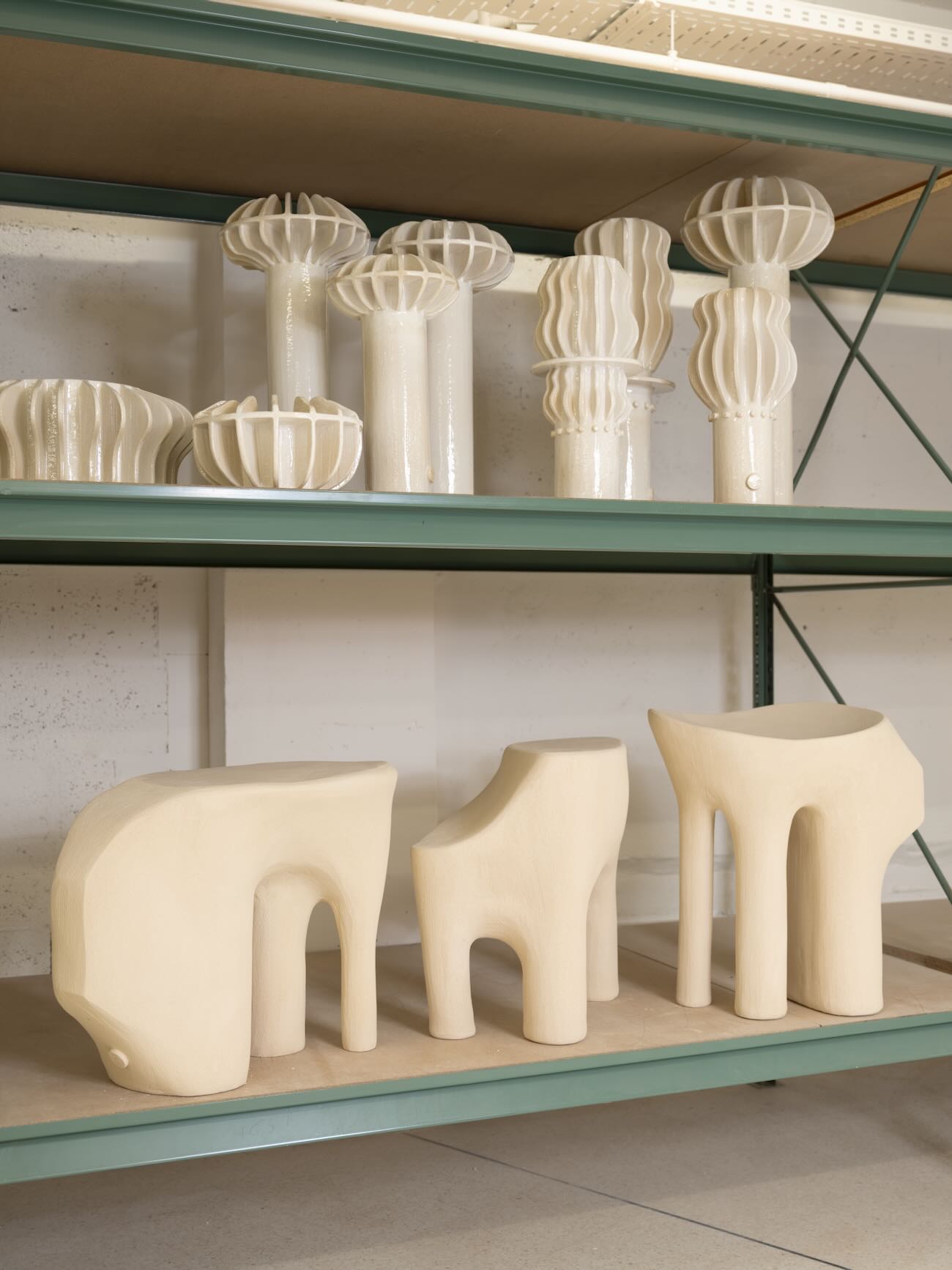
From Parisian haute couture to California ceramics studios, Olivia Cognet has forged a unique path at the crossroads of art, design, and craftsmanship. Now based in Vallauris, a town with a rich ceramic heritage, she creates sculptural works that blur the boundaries between furniture, architecture, and sculpture. Monumental bas-reliefs, lighting fixtures, consoles, and bespoke pieces: in her multidisciplinary studio, she explores materials, organic forms, and traditional craftsmanship. We meet an artist who never stops reinventing her creative language.
Your career began in the world of fashion and haute couture in Paris before leading you toward sculpture and design. What inspired you to move from clothing to objects, and eventually to works of monumental proportions?
I don’t think there was one particular turning point. It was more of a natural evolution. I’ve always felt the need to draw, create, and work with materials.
My years in fashion, particularly at Lanvin and Isabel Marant, were incredibly formative. I learned the importance of proportion, attention to detail, the high standards of craftsmanship, and the idea that every creation should have a strong identity.
But gradually, I felt the need for a more direct, more physical relationship with materials.
When I moved to Los Angeles in 2016, I discovered working with clay. It was a real revelation. I loved the freedom of being able to build a three-dimensional form directly, without necessarily going through all the stages involved in fashion design.
My first pieces gradually gave way to sculptures, furniture, bas-reliefs, and increasingly monumental projects. This change of scale happened naturally, driven by a desire to do more than simply create objects: I wanted to transform spaces, shape their atmosphere, and structure entire environments.
Today, I consider myself first and foremost a sculptor. Ceramics was a wonderful gateway into this world, but it is now just one of the many languages I use to express my work.
You’ve lived and worked in several places, including Paris, California, and now Vallauris. How have these different countries, cities, and environments shaped your perspective and influenced the evolution of your artistic practice?
Each place has given me something very different. Paris taught me discipline, an appreciation for the arts, and a deep sensitivity to craftsmanship. California was an extraordinary experience of freedom, where the boundaries between disciplines felt much less rigid. That freedom left a lasting impression on me. It gave me the confidence to imagine things on a completely different scale.
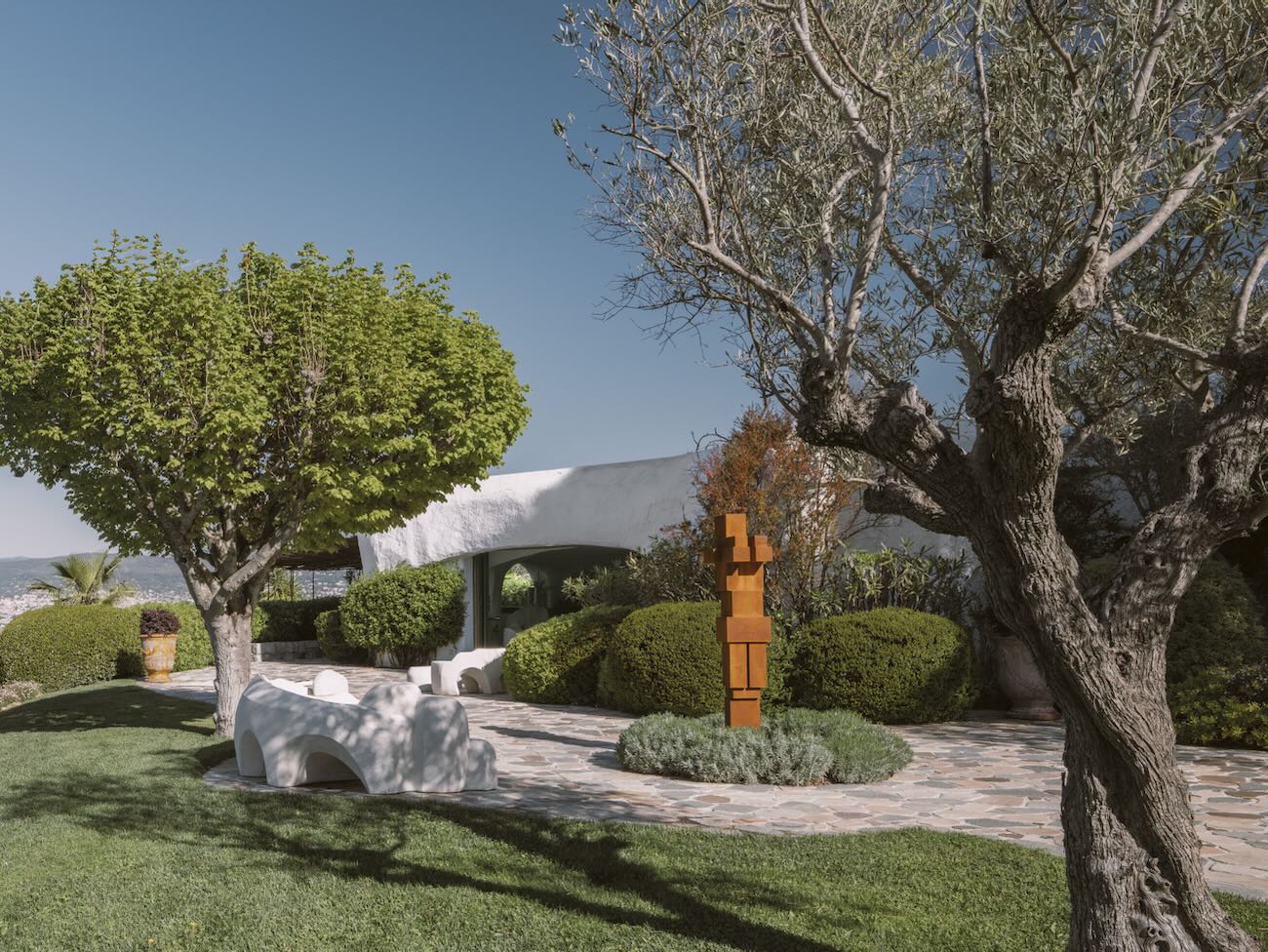
The Mediterranean is part of who I am, since I grew up in Nice. I’m particularly drawn to the organic architecture of Jacques Couëlle and Antti Lovag, and their way of imagining sculptural spaces that people can actually inhabit. I find that endlessly inspiring.
I think my work emerged from the meeting of these different worlds.
After your experience in the United States, why did you choose Vallauris as the location for your studio? What does this town, with its long ceramic tradition and its connection to Picasso, bring to your work and everyday life?
Returning to the South of France made a lot of sense to me personally. But choosing Vallauris was above all about settling in a place where working with clay has an extraordinary history and culture.
Of course, some great artists have helped put this town on the map, but what particularly interests me is that its craft traditions are still very much alive.
You meet artisans here who possess an incredibly deep knowledge of their craft. That’s an invaluable resource when you want to experiment.
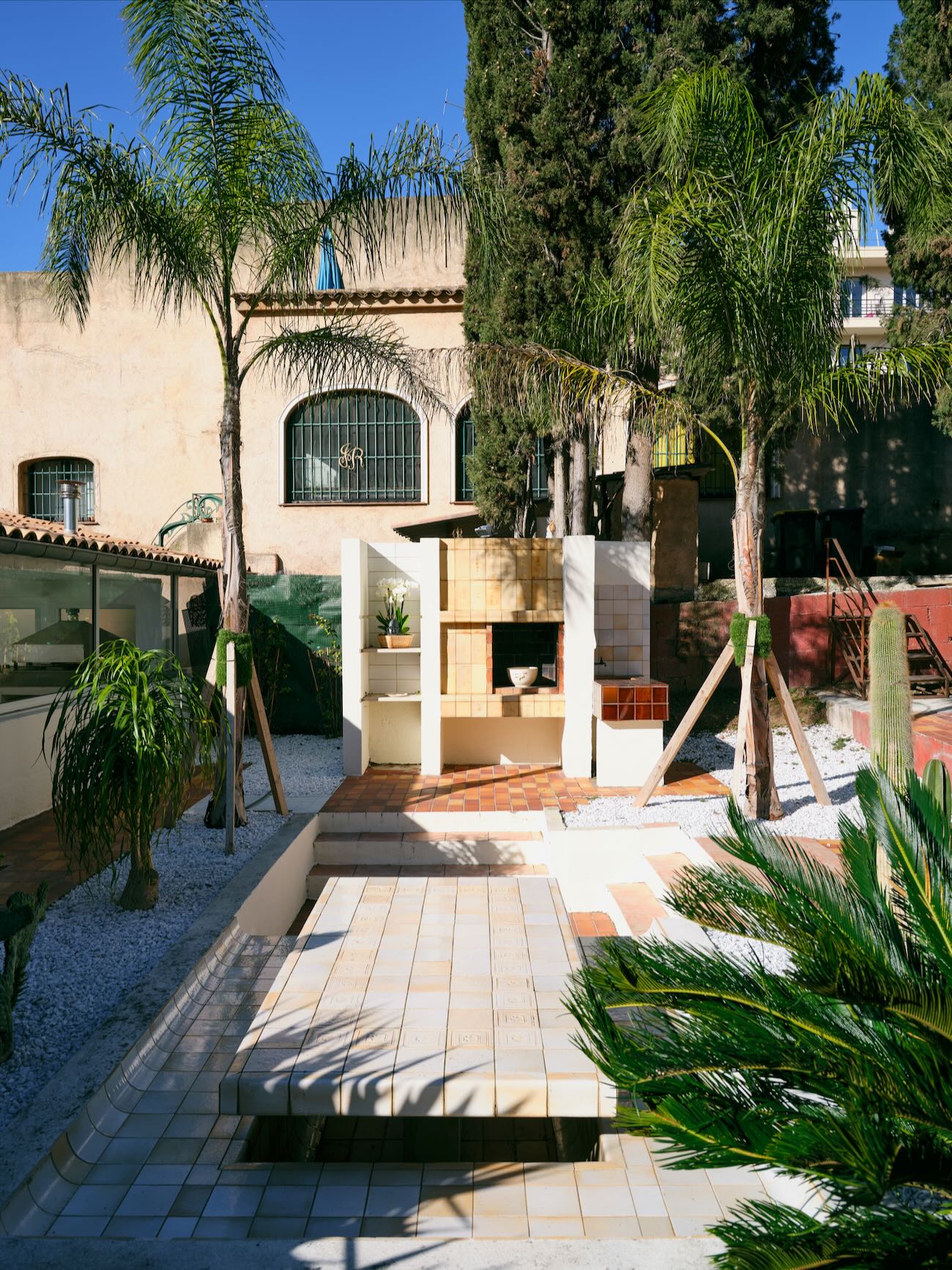
I was fortunate enough to move into Roger Capron’s former studio, a place with a very special soul that has played an important role in my journey. Today, that space has become our gallery, while our studio of nearly 700 square meters remains in the heart of Vallauris. It allows us to develop several monumental projects simultaneously, experiment on a large scale, bring new materials and processes in-house, and maintain confidentiality around certain creations.
Your studio feels like a true creative laboratory, bringing together different disciplines and materials. How does a new work come to life? Do you start with a drawing, a material, an intuition, or the space for which the piece is intended?
It very often starts with drawing. I draw constantly; it’s really the foundation of my work. But an idea can also emerge from a building, a material, or a particular detail.
Drawing allows me to establish an intention, but I like to maintain a great deal of freedom as the piece takes shape. I enjoy letting the material play a role in the creative process, allowing a volume to evolve or an irregularity to suggest a new direction.
Today, my work is increasingly connected to architecture. When I design a fireplace or a fountain, I’m not just thinking about the piece itself, but about how it will inhabit the space.
I’m drawn to increasingly bold volumes, sometimes massive, brutalist, or structural, but I still want them to retain a certain sensuality. A texture, an irregularity, something unexpected. The studio is precisely where all these intuitions can come to life.
Your creations seem to maintain an ongoing dialogue with nature and architecture. What are your main sources of inspiration? Organic forms, landscapes, ancient or contemporary architecture, travel?
Architecture is probably one of my greatest sources of inspiration, particularly when it becomes sculptural in its own right.
I’m very drawn to the work of Jacques Couëlle and Antti Lovag, but also Constantino Nivola, whose monumental reliefs have a powerful relationship with architecture. I also admire Brancusi and Noguchi, who each explored, in their own way, the boundaries between sculpture, space, and objects.
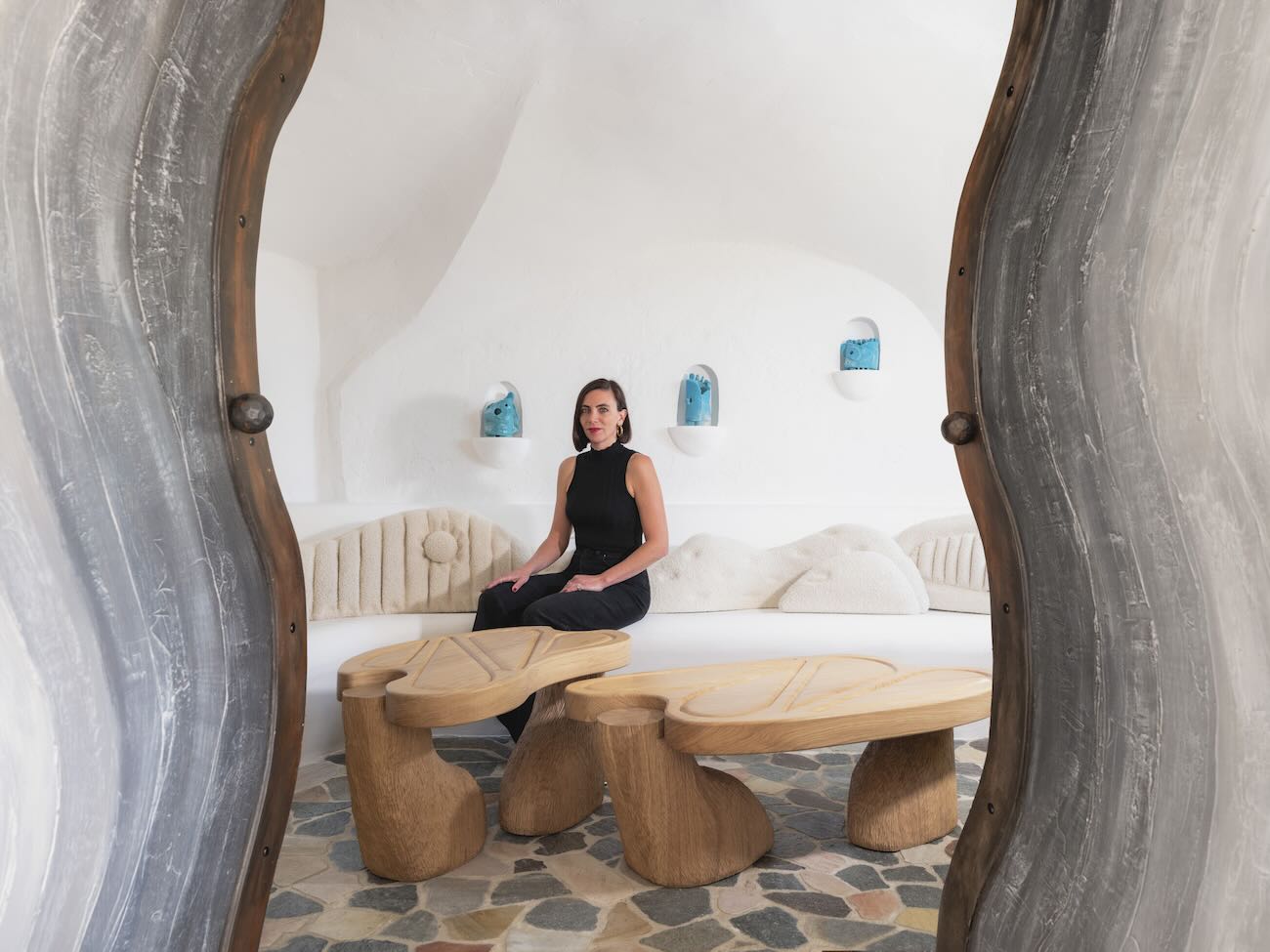
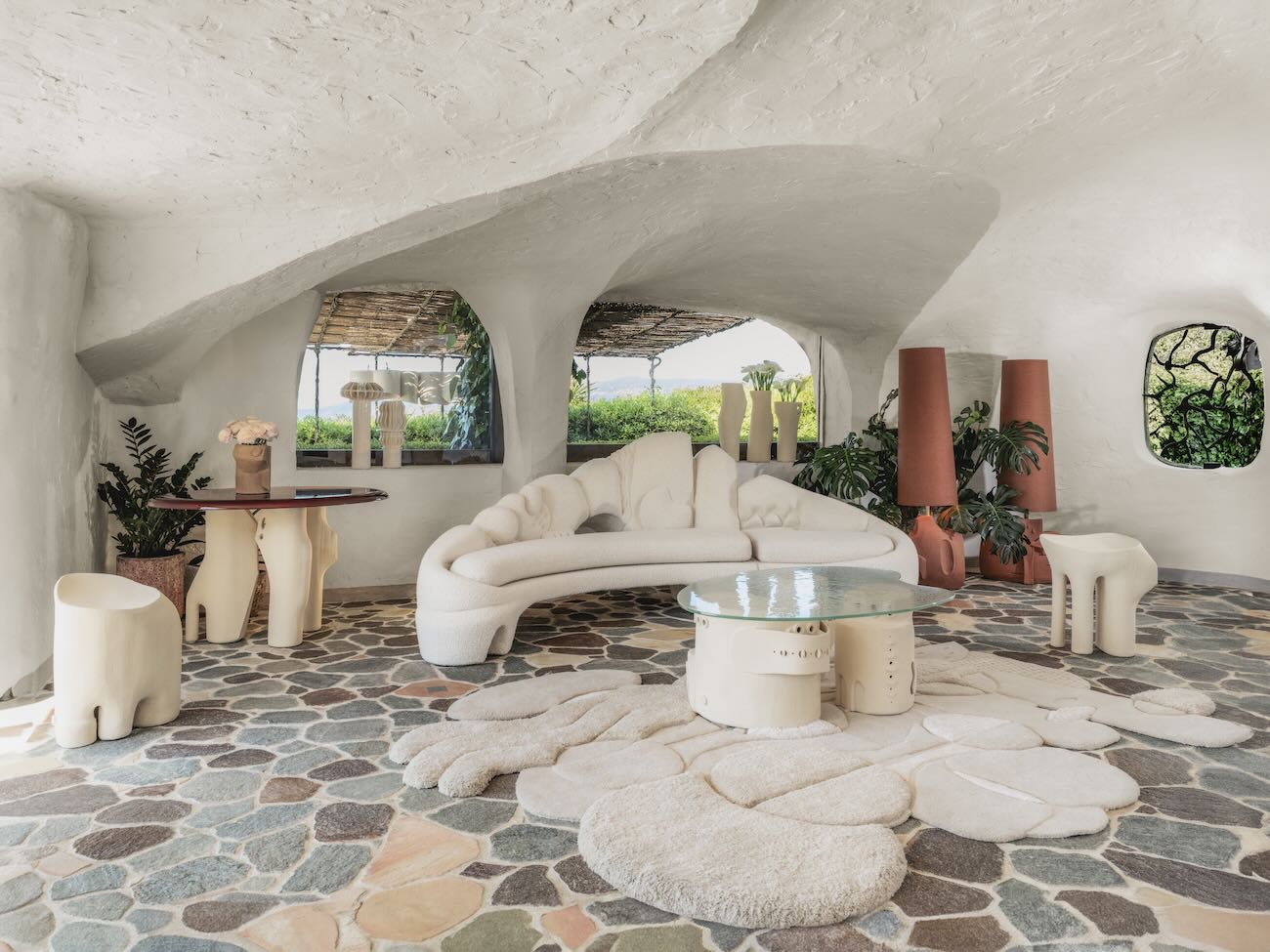
Inhabiting the Landscape House, at Jacques Couëlle’s Dragon Hill house, was also an important experience for me. It allowed me to explore even further the idea of creating works that become an integral part of their surroundings.
You’ve taken over Roger Capron’s former studio in Vallauris, a place steeped in history. Today, you work with a team of artisans from a wide range of disciplines. How do you organize this collective creative process, and how personally involved are you in bringing your works to life?
Roger Capron’s former studio is a place I feel deeply connected to. It embodies the freedom to move from ceramic objects to architecture, something that strongly resonates with my own artistic approach.
I’m surrounded by a team of local artisans whose skills complement one another. This collaborative dimension has become essential to my work. Some pieces require highly specialized technical knowledge, sometimes involving several months of research, fabrication, and experimentation.
I’m personally involved in every stage of the creative process. I draw, work on volumes, proportions, and materials, and pay particular attention to how an artistic vision translates into the actual making of a piece.
I love the exchange between my artistic perspective and the intelligence of the artisan’s hands. Craftsmanship shouldn’t simply be about executing an idea; it can also open up entirely new possibilities.
You collaborate with exceptional craftspeople, including Atelier Dégut in Lyon for upholstery and Atelier Février for textiles. How do you choose your partners? And how do you translate your sculptural language into such different forms of craftsmanship?
Above all, I choose my partners for their sensitivity, their high standards, and their ability to engage in a genuine creative dialogue. I love working with artisans who have exceptional mastery of their craft, but who also share a curiosity and willingness to push beyond familiar techniques.
My collaboration with Atelier Février grew out of something I’d wanted to explore for a long time: translating my bas-relief work into textiles. I’ve always been fascinated by tapestries and wall rugs from the 1960s and 1970s, which were almost architectural elements in their own right. Together, we developed rugs with free-form outlines and sculpted, textured surfaces.
With Atelier Dégut, the approach was different. The Le Jacques sofa is first and foremost a sculpture that also happens to be a place to sit. It has organic volumes and a strong sculptural presence, while remaining a functional piece of furniture.
Ultimately, whether I’m working with clay, fabric, or upholstery, my exploration remains the same: investigating volume, material, and the way a work inhabits a space.
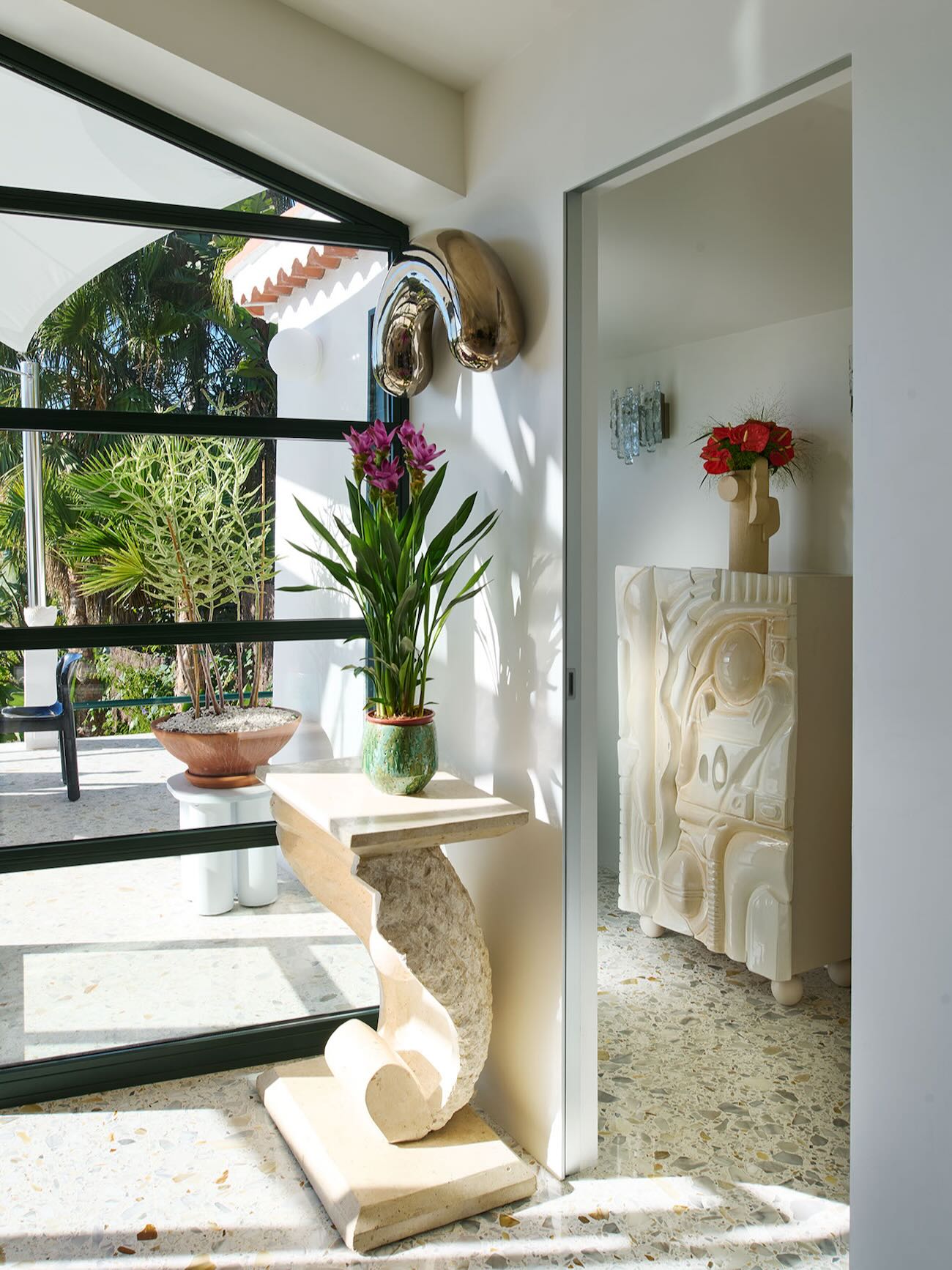
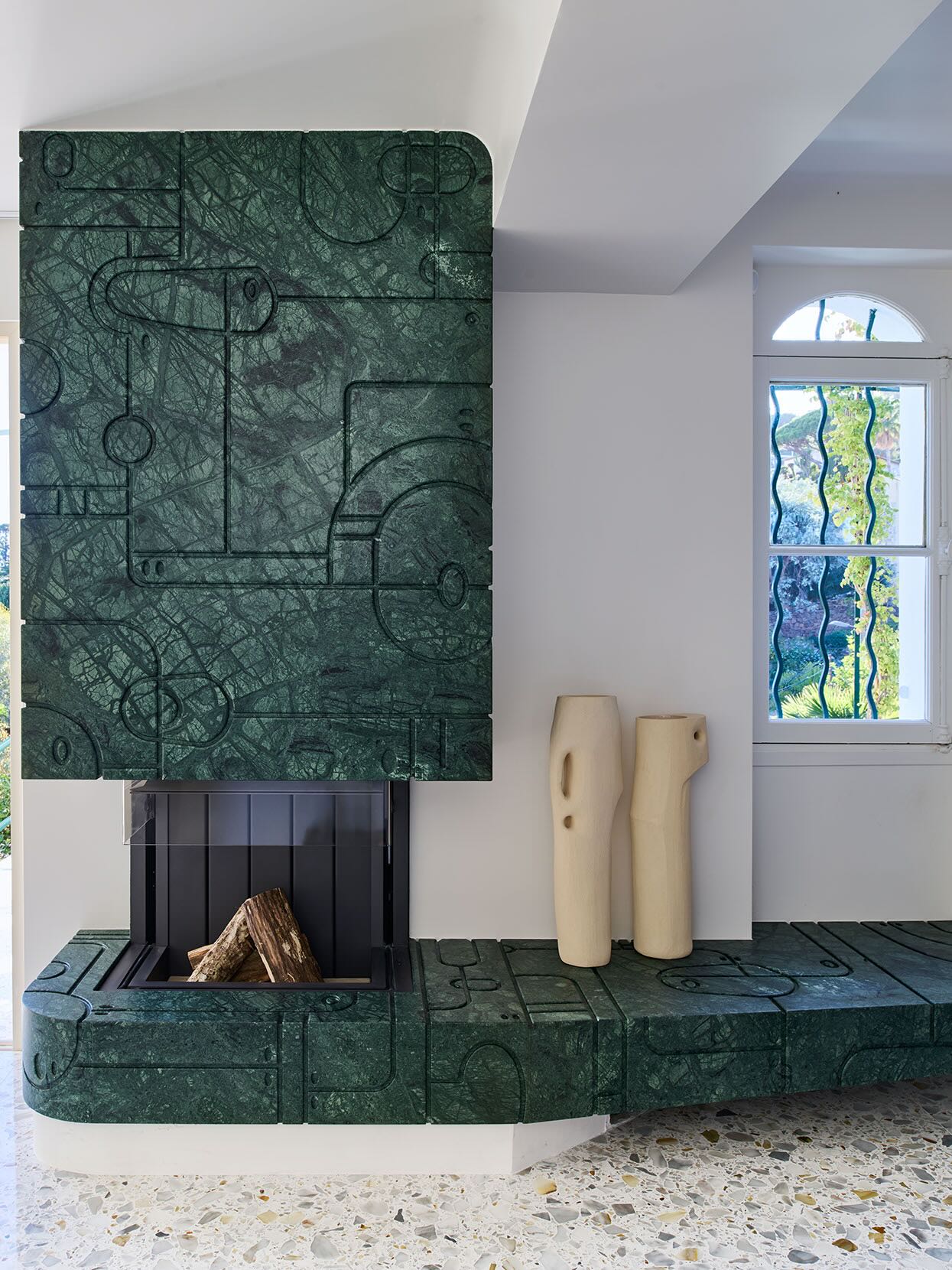
You create both unique, bespoke pieces, sometimes on a monumental scale, and collections of furniture and objects. How do you approach these two forms of creation? Does producing collections require compromises, or does it offer a new field for experimentation?
There’s an important distinction I’d like to make: we don’t mass-produce or manufacture editions. All our works are individually handcrafted, and none are produced in series.
Some pieces belong to clearly defined collections, sharing a common aesthetic language, almost like a signature, but each one is handcrafted in our studio. The human touch, the unique characteristics of the materials, and the natural variations inherent in the creative process make every piece one of a kind. This is something I care deeply about.
Creating a monumental piece for a specific location offers extraordinary freedom. It allows you to work directly in relation to the architecture, play with proportions, and transform the perception of a space. But ultimately, my approach remains the same, regardless of the scale of the work. I’m always seeking that sculptural presence.
What I’m looking for is creative freedom. The freedom to move between art, design, and architecture without ever having to choose between the three, regardless of how others might define my work.
Your works are now exhibited internationally, notably through The Future Perfect in the United States, and your creative universe also connects with design houses such as Tacchini. How do you experience this international recognition? And how far would you like to develop collaborations with design brands and manufacturers?
It’s obviously very exciting to see my work travel and find its audience. I have a special connection with the United States, since Los Angeles is where I first began working with clay.
Working with my galleries has also allowed me to develop more ambitious projects, explore different scales, and bring my work into dialogue with a wide variety of architectural settings. I also find it fascinating to see how my creative universe can interact with that of design houses such as Tacchini, which have their own history, culture, and relationship with furniture.
My artistic independence and creative freedom are essential to me. I’m not interested in pursuing collaborations simply for the sake of having more of them. What matters to me are meaningful encounters that allow my work to evolve and open up new possibilities.
You’ve already explored ceramics, marble, stone, lava, metal, wood, and now textiles. Is there a material or technique you still dream of mastering? And what would be your wildest dream project, if there were no technical or budgetary constraints?
I think what interests me today isn’t so much discovering another material as pushing the ones I already work with much further, particularly through new techniques and changes in scale.
I’m increasingly drawn to raw materials, mass, and architectural volumes. I’d like to continue exploring this raw, powerful dimension while preserving something deeply organic and sensitive.
My dream wouldn’t simply be to create a monumental sculpture inside a building, but to design an entire architectural space conceived as a single work of art: the walls, floors, openings, seating, pools, fireplaces, gardens…
A place where sculpture would no longer be something added to architecture, but would become the architecture itself.
It’s an idea that has fascinated me for a long time. I think my ultimate dream would be to create a space you could enter, move through, sit in, and live in, without really knowing where architecture ends and sculpture begins.
Interview by Eric Foucher / Photos: Florent Touzet (Studio Capron), Eleonora Paciullo (Dragon Hill), and Richard Powers (Villa Olivia Cognet).
